Paper Wins Again: The Quiet Movement of Puzzle Lovers Leaving Their Screens Behind
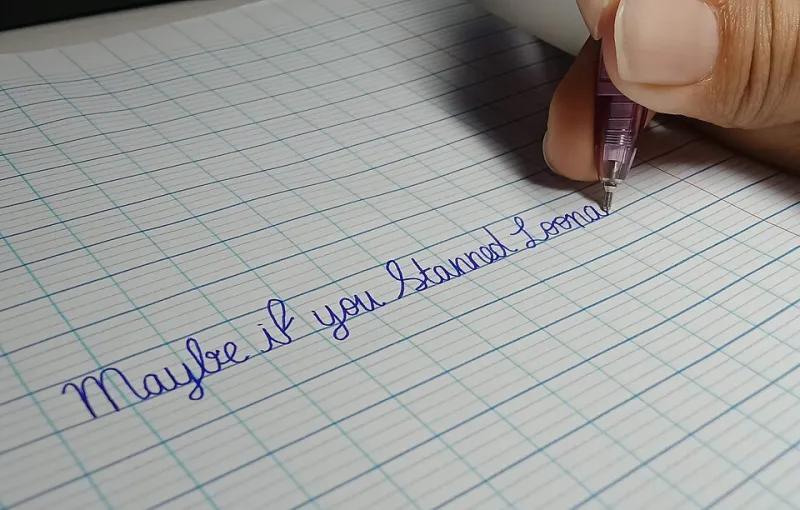
Photo: Jiafei Slay Queen, CC0, via Wikimedia Commons
It might be the most counterintuitive tech story of the moment: at a time when digital platforms offer unlimited puzzles, instant difficulty adjustment, built-in hints, and progress tracking, a meaningful number of sudoku enthusiasts are choosing to buy a physical book instead.
Not because they lack access to apps. Not because they don't know how to use them. But because, after spending time with both, they actively prefer the paper version.
This isn't nostalgia for its own sake. Something more substantive is going on.
The Numbers Behind the Trend
Puzzle book sales data has told an interesting story over the past few years. While the pandemic-era surge in puzzle consumption affected both digital and physical formats, the print category has shown surprising resilience even as app usage has matured and stabilized.
Bookstore buyers and publishing industry observers have noted steady demand for physical sudoku books across retail channels — not just specialty puzzle stores, but mass-market chains, grocery stores, and airport newsstands. The format that many assumed would be displaced by apps has instead found a durable audience.
Anecdotally, the conversation in online puzzle communities reflects this. Forum threads and social media discussions frequently surface variations of the same story: someone who was primarily an app user, picked up a paper book, and found themselves preferring it in ways they didn't fully anticipate.
Screen Fatigue Is Real — And It's Affecting How We Relax
To understand why people are migrating back to paper, you have to start with how most Americans spend their days. For a huge portion of the population, work happens on a screen. Communication happens on a screen. Entertainment happens on a screen. By the time evening rolls around, many people are carrying a cumulative cognitive and visual load that they may not consciously register but absolutely feel.
When that person reaches for a puzzle to unwind, opening another app means adding to the same sensory environment they've been in all day. The screen is still there. The notifications are still possible. The blue light is still doing its thing.
A paper puzzle book, by contrast, represents a genuine environmental shift. Different surface. Different light source. Different physical engagement. For many people, that distinction turns out to matter more than they expected.
Researchers studying what's sometimes called "digital fatigue" have found that the mode of engagement — not just the content — affects how restorative an activity feels. Reading a physical book produces different cognitive and physiological responses than reading the same content on a screen. It's reasonable to expect something similar applies to puzzle-solving.
The Tactile Factor Nobody Talks About Enough
Here's something puzzle app developers can't easily replicate: the physical act of writing.
Putting pencil to paper engages the hand, requires a different kind of attention, and creates a tangible record of your thinking. When you write a candidate number in the corner of a cell, cross it out, and replace it with a confirmed placement, you're leaving a physical trace of your reasoning process. That trace is yours. It has weight and texture and the small satisfying scratch of graphite on paper.
A lot of people who've returned to paper puzzles cite this without quite knowing how to articulate why it matters. They describe it as feeling "more real," or say they feel "more present" while solving. Cognitive scientists studying embodied cognition — the idea that physical action shapes thought — might suggest this isn't just sentiment. The motor engagement of writing may actually support certain kinds of analytical thinking in ways that tapping a touchscreen doesn't.
There's also the permanence. A completed physical puzzle book is an artifact. You can flip back through it. You can see your handwriting change as you got better. You can give it to someone. It has a kind of presence that a solved puzzle in an app's history log simply doesn't.
What App Platforms Are Doing in Response
The digital puzzle industry isn't ignoring this trend. Several platforms have introduced features specifically designed to close the gap between screen and paper experiences — stylus support, notebook-style interfaces, the ability to write freehand candidate notes rather than tapping preset options.
Some have leaned into the data and gamification side, offering streaks, leaderboards, and achievement systems that paper obviously can't match. Others have focused on puzzle quality and variety, arguing that the sheer range of content available digitally justifies the format.
It's a genuine tension. Apps offer real advantages: unlimited supply, portability across devices, difficulty calibration, and accessibility features that make puzzles available to people who might struggle with print. These aren't trivial benefits.
But the paper contingent isn't making a purely rational argument. They're describing a qualitative experience that the metrics don't fully capture.
Who's Actually Making the Switch?
The people returning to paper skew in some surprising directions. Yes, there are older solvers for whom paper always felt more natural. But there's also a notable contingent of younger players — particularly those in their late twenties and thirties — who grew up with smartphones and are now actively curating their relationship with screens.
This group tends to talk about paper puzzles in the same breath as other analog hobbies that have seen revivals in recent years: vinyl records, physical books, film photography, handwritten journaling. There's a conscious choice being made about what kind of attention different activities deserve and what environments they want to create around their leisure time.
For many of them, a puzzle book on the coffee table is a statement as much as a preference: this is time that isn't screen time.
The Future Is Probably Both
It would be overly dramatic to declare paper the winner of some format war. The reality is that most puzzle enthusiasts aren't choosing one exclusively. They use apps when they're on the subway or waiting in line. They reach for a book when they're settling in for the evening or want a genuinely device-free hour.
The more interesting question is what the paper comeback tells us about how we want our leisure time to feel. The fact that millions of people are voluntarily choosing a slower, less feature-rich, non-gamified version of something they could do on their phone suggests that the experience of puzzling — the texture and pace and physical engagement of it — matters in ways that raw convenience doesn't fully address.
The grid is the same either way. But how you get there turns out to matter more than anyone expected.