Paper vs. Screen: Is Your Sudoku App Actually Making You a Worse Puzzle Solver?
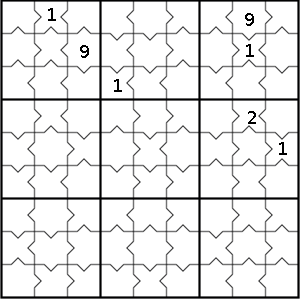
Photo: Saját munka a fenti szabad kép felhsználásával, CC0, via Wikimedia Commons
Let's be honest: the sudoku app on your phone is incredibly convenient. It's always there, it auto-fills your pencil marks, and it'll politely tell you when you've made a mistake before you've even noticed. But here's the thing — all that convenience might be quietly working against you.
More puzzle enthusiasts and cognitive researchers are starting to ask a genuinely uncomfortable question: does solving sudoku on a screen give your brain the same workout as solving it on paper? The answer, it turns out, is more complicated than most of us expected.
The Tactile Difference Nobody Talks About
When you pick up a pencil and start working through a sudoku grid, your brain isn't just processing numbers. It's also managing a whole layer of physical experience — the pressure of the pencil, the spatial relationship between your hand and the page, the act of physically erasing a wrong guess. Neuroscientists call this "embodied cognition," and it refers to the way our bodies and physical sensations influence how we think and remember.
Research out of the University of Washington and other institutions has shown that handwriting, compared to typing, engages more distinct neural pathways — including those tied to memory encoding and fine motor coordination. While sudoku isn't exactly creative writing, the principle carries over. The physical act of writing a candidate number into a corner of a cell, crossing it out, reconsidering — all of that creates a richer sensory experience than tapping a digit on glass.
"There's a reason medical students still take notes by hand even in an era of laptops," one cognitive psychologist noted in a 2022 review on learning and motor engagement. "The friction isn't a bug. It's a feature."
What Apps Get Right (And What They Don't)
To be fair, digital sudoku platforms aren't villains here. Apps like the one you'll find right here on Sudoku4 offer real advantages: accessibility, adjustable difficulty, instant feedback, and the ability to play anywhere from a waiting room to a cross-country flight. For casual players who just want to unwind, those features are genuinely valuable.
But the instant-feedback loop is worth examining more closely. Most apps will flag an error the moment you place an incorrect digit. That's helpful for beginners learning the rules — but for players who want to sharpen their deductive reasoning, it can actually short-circuit the very cognitive process that makes sudoku so mentally beneficial.
When you're solving on paper, a mistake might sit undetected for five, ten, even twenty moves. Eventually, you hit a logical dead end and have to backtrack, reconstructing your reasoning step by step. That process — frustrating as it feels — is exactly the kind of deep problem-solving engagement that builds stronger neural connections over time.
Apps that remove that friction are essentially handing you training wheels you never take off.
Pattern Recognition: Where the Gap Gets Real
One of the most-cited cognitive benefits of sudoku is improved pattern recognition — the ability to scan a grid and quickly identify where a number must (or cannot) go. Experienced solvers develop something close to intuition for this. But how you practice affects how that skill develops.
On paper, your eyes move freely across the full grid. You might physically tap the page with your pencil, draw arrows between related cells, or circle a row to keep your focus. Your spatial memory is fully engaged. On a screen, especially a phone screen, the grid is smaller, your interaction is limited to taps, and many apps highlight related cells automatically — doing some of the visual scanning work for you.
Several regular players on puzzle forums have reported something interesting: they feel sharper and more confident when they occasionally return to paper puzzles after long stretches of app-based solving. The grid feels more three-dimensional, somehow. Their eyes work harder — and their brains seem to respond.
The Retention Question
Here's where it gets really interesting. Cognitive research consistently shows that we retain information and skills better when we learn them through varied, effortful practice rather than smooth, frictionless repetition. This is called the "desirable difficulties" framework, and it was developed largely by UCLA psychologist Robert Bjork.
Applied to sudoku: the more your app smooths out the hard parts — auto-noting candidates, highlighting errors, offering unlimited undos — the less your brain has to work to consolidate what it's learning. You might finish more puzzles per hour, but you're likely retaining fewer of the strategic insights that make you genuinely better over time.
Paper puzzles, by contrast, demand commitment. You can't "undo" a pen mark without effort. That commitment changes how carefully you think before acting.
So Should You Delete Your Sudoku App?
Absolutely not. That would be throwing the baby out with the bathwater — and honestly, a sudoku app used thoughtfully is still a fantastic brain tool. But here's a practical suggestion worth trying: mix up your mediums.
Spend a few sessions a week with a physical puzzle book. Turn off the auto-error-checking in your app settings if that option exists. Challenge yourself to solve at least one puzzle per week without any hints or candidate assistance. That intentional friction is where the real cognitive gains live.
Your phone app is a great gateway to the puzzle. Just don't let it become a crutch that keeps you from fully developing the problem-solving muscle that makes sudoku so rewarding in the first place.
The grid is the same whether it's on paper or pixels. What changes is how hard your brain has to fight for the answer — and that fight is kind of the whole point.