Grids, Uncertainty, and the Great American Puzzle Boom: What the Numbers Tell Us
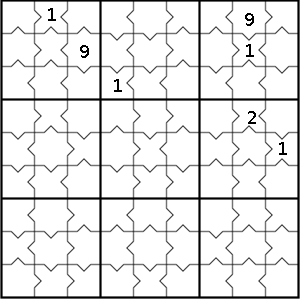
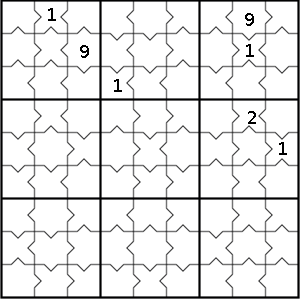
Photo: Saját munka a fenti szabad kép felhsználásával, CC0, via Wikimedia Commons
Something quietly remarkable happened to the humble sudoku grid starting around 2020. Puzzle books that had been sitting in the mid-tier sections of bookstore sales charts suddenly shot into bestseller territory. App download numbers for logic puzzle platforms surged by double digits. And millions of Americans who hadn't touched a number grid since middle school found themselves hunched over one at the kitchen table, pencil in hand, looking for something they couldn't quite name.
The question worth asking now, a few years down the road, is whether any of that stuck — and what it actually meant.
The Numbers Don't Lie
Book industry tracking data tells a striking story. According to NPD BookScan figures cited by several publishing industry outlets, puzzle and game book sales in the US jumped more than 30 percent between 2019 and 2021. Sudoku titles specifically saw some of the steepest climbs, with major publishers reporting reorders at rates they hadn't seen in over a decade.
On the digital side, the picture was equally dramatic. App analytics firms tracking the puzzle category noted that daily active user counts for logic puzzle apps — sudoku chief among them — spiked sharply in the spring of 2020 and, crucially, didn't fully retreat afterward. A meaningful chunk of those new users became regulars.
Retailers noticed too. Mass-market chains that had quietly shrunk their puzzle book sections over the previous decade started restocking aggressively. Some publishers scrambled to meet demand they simply hadn't anticipated.
So What Were People Actually Looking For?
Here's where it gets interesting. The obvious explanation — people were bored at home and needed something to do — is real, but it's incomplete.
Behavioral psychologists who study how people cope with stress and uncertainty point to something more specific. When the external world feels chaotic and uncontrollable, humans instinctively seek out environments where the rules are clear and effort reliably produces results. A sudoku puzzle is, at its core, a closed system with a guaranteed solution. Every clue means something. Every placement either works or it doesn't. There's no ambiguity, no luck, no external variable that can sneak in and ruin your progress.
That's not a trivial thing when the news cycle is delivering daily doses of the unpredictable.
Research on what psychologists call "cognitive load management" suggests that engaging with structured, rule-based tasks can provide a genuine sense of agency and relief during periods of high ambient stress. You're not escaping from reality so much as giving your brain a place where it can feel competent again.
Puzzle publishers who stayed close to their customer feedback during that period heard this reflected back constantly. People weren't just killing time. They were actively seeking calm.
A Trend or a Transformation?
The more interesting question is whether 2020 was a blip or a turning point.
Early signs suggest it was closer to the latter. Puzzle book sales have moderated from their pandemic-era peaks, but they haven't collapsed back to pre-2020 baselines. A meaningful segment of the people who discovered or rediscovered sudoku during that period appear to have kept it as a genuine habit rather than a quarantine novelty.
App developers tracking long-term retention data have noted something similar. The cohort of users who started solving puzzles in 2020 shows higher-than-average long-term engagement compared to cohorts from previous years. That's not the signature of a temporary craze. That's habit formation.
There's also a demographic dimension worth noting. While sudoku has historically skewed toward older solvers, the post-2020 wave brought in significantly more younger players — people in their twenties and thirties who had grown up associating the puzzle with their parents or grandparents. That age group tends to be sticky once they find something they genuinely enjoy, which bodes well for the long-term health of the category.
What It Says About Us
Pull back far enough and the puzzle boom starts to look like a pretty clear cultural signal. At a moment when Americans were grappling with a loss of control across virtually every dimension of life — health, work, finances, social connection — tens of millions of people independently reached for something that offered the opposite experience.
There's something almost moving about that, if you think about it. Not a passive escape like streaming a show, but an active engagement. A problem that needed solving. A grid that needed filling. A small, portable world where the rules held.
Puzzle publishers and app developers will tell you they were the lucky beneficiaries of that moment. But the behavioral psychologists might frame it differently: the puzzle boom wasn't a coincidence. It was a very human response to a very difficult time.
And if the retention numbers are any indication, a lot of people found something in those grids they didn't want to put back down.
What This Means for Puzzle Players Today
If you're someone who picked up sudoku during the past few years and stuck with it, you're part of a genuine cultural shift — not a trend that fizzled. The community around logic puzzles in the US is measurably larger and younger than it was five years ago.
And if you're someone who's been solving for decades, that's good news too. More solvers means more innovation, more platforms, more books, and more people to share the quiet satisfaction of filling in that last box.
The grid, it turns out, was exactly what a lot of people needed. The data just confirms what solvers already knew.