The Sudoku Peak: What Age Groups Actually Dominate the Grid (The Answer Will Surprise You)

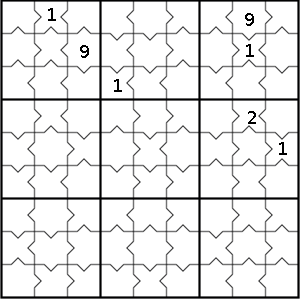
Photo: Gannu03, CC BY-SA 4.0, via Wikimedia Commons
Ask most people when they think the average person peaks at sudoku, and they'll probably say something like "mid-twenties" or "whenever your brain is sharpest." It's a reasonable guess — and it's also almost certainly wrong.
The relationship between age and puzzle-solving ability is a lot more nuanced, more interesting, and frankly more encouraging than the conventional wisdom suggests. Whether you're 22 or 62, the factors that actually determine how good you are at sudoku might have very little to do with the number on your birthday cake.
The Common Assumption — And Why It Falls Apart
The cultural narrative around aging and cognitive ability tends to go one direction: things decline. Processing speed slows down. Working memory shrinks. Reaction time increases. All of that is true in a narrow, measurable sense — and it's also profoundly incomplete when applied to something like sudoku.
Sudoku isn't a reaction-time sport. It's not a test of how fast your neurons fire or how quickly you can retrieve a random fact. It's a logic puzzle — one that rewards systematic thinking, patience, strategic planning, and the ability to hold multiple possibilities in mind simultaneously while methodically eliminating them.
Those skills don't peak at 24. In many cases, they're still developing well into a person's forties and fifties.
What the Data Actually Shows
Large-scale puzzle platform data, including reports from competitive sudoku communities and cognitive research studies using puzzle-solving as a benchmark, paints a picture that consistently surprises researchers.
Raw solving speed does tend to peak in younger adults — roughly the 18-to-35 bracket. People in this group often move through easier and medium puzzles faster than any other demographic, and their error rates on straightforward grids are impressively low.
But speed isn't the whole story. When researchers shift the lens to accuracy on harder puzzles, strategy sophistication, and the ability to recover from a logical dead end without abandoning the puzzle entirely, a different group starts to emerge as dominant: solvers in their 40s and 50s.
A 2020 analysis examining puzzle performance across age groups found that solvers between 45 and 60 consistently outperformed younger cohorts on expert-level sudoku — not because they were faster, but because they made fewer catastrophic errors, used more efficient solving strategies, and were significantly less likely to guess blindly when a puzzle got difficult.
Why Experience Beats Raw Speed
Think about what makes a truly elite sudoku solver. It's not the ability to scan a row in 0.3 seconds. It's the accumulated library of patterns, techniques, and strategic heuristics that an experienced solver brings to every grid.
Techniques like X-Wing, Swordfish, or naked pairs aren't things you discover the first time you pick up a puzzle. They develop over months and years of solving. A 50-year-old who has been doing sudoku for fifteen years has a fundamentally different cognitive toolkit than a 25-year-old who's been at it for eight months — regardless of who has the faster baseline processing speed.
This mirrors what cognitive scientists call "crystallized intelligence" — the accumulated knowledge, pattern recognition, and procedural expertise that actually grows with age, as opposed to "fluid intelligence," which is the raw problem-solving speed that tends to decline. Sudoku, it turns out, rewards crystallized intelligence enormously.
The Teen Paradox
Here's something that surprises a lot of people: teenagers, despite having some of the fastest raw cognitive processing of any age group, tend to perform inconsistently on harder sudoku puzzles. The reason is interesting.
The prefrontal cortex — the part of the brain responsible for planning, impulse control, and strategic patience — isn't fully developed until around age 25. Sudoku, especially at expert difficulty levels, requires exactly the kind of deliberate, patient, step-by-step reasoning that the prefrontal cortex governs.
Younger teen solvers often jump to conclusions, guess under uncertainty rather than continuing to deduce, and struggle with the sustained focus that a hard puzzle demands. They're cognitively fast but strategically underdeveloped — which is why a methodical 55-year-old can routinely outperform a quick-thinking 16-year-old on a diabolical-difficulty grid.
What Happens After 60?
This is where the data gets both more complex and more hopeful than most people expect.
Yes, processing speed continues to decline with age. Yes, working memory — the ability to hold multiple candidate numbers in mind simultaneously — does show measurable decreases in many adults over 65. But the picture is far from bleak, for two important reasons.
First, experienced solvers develop compensatory strategies. They externalize their working memory — using pencil marks, systematic notation, and structured approaches that reduce the cognitive load on internal memory. In other words, they solve smarter rather than faster, and that adaptation is remarkably effective.
Second, and perhaps most importantly, regular puzzle-solving appears to slow the very declines it's compensating for. Research from the University of Exeter found that adults over 50 who regularly engaged in word and number puzzles showed cognitive function equivalent to people up to ten years younger. Sudoku, as a close relative of those number-based tasks, appears to carry similar protective benefits.
The Real Peak Is a Moving Target
So when do you peak at sudoku? The honest answer is: it depends on what you mean by "peak."
If you mean raw speed on easy puzzles: probably your late 20s to mid-30s.
If you mean strategic sophistication and accuracy on hard puzzles: your 40s and 50s are genuinely strong years.
If you mean sustained engagement, mental resilience, and the wisdom to know when to backtrack versus when to push forward: that might keep developing well past 60 for regular solvers.
The most encouraging finding in all of this research isn't about any particular age group. It's the consistent discovery that the single strongest predictor of puzzle performance — across every age bracket — is simply how often you practice. A 68-year-old who solves three sudokus a day will outperform a 30-year-old who dabbles once a week, almost every time.
Your age is a factor. It's just not the most important one. The grid doesn't check your ID before it challenges you — and that's exactly what makes it such a great equalizer.