Getting Harder Before Getting Easier: The Surprising Science of Puzzle Difficulty

Photo: person solving complex puzzle brain activity thinking, via miro.medium.com
When the Hard Stuff Makes the Easy Stuff Click
Most of us follow a pretty logical path when we're learning something new: start simple, build confidence, then slowly ramp up the difficulty. Makes sense, right? But when it comes to sudoku — and puzzle-solving in general — researchers are finding that the conventional wisdom might actually be holding you back.
Welcome to what some cognitive psychologists call the desirable difficulty effect: the idea that introducing strategic friction into your learning process can accelerate skill development in ways that easy repetition simply can't. And if you've ever spent an afternoon wrestling with an irregular-shaped sudoku grid only to blaze through a standard 9x9 the next morning, you may have already experienced this firsthand.
What's Actually Happening in Your Brain
Here's the short version of the neuroscience. When you solve a familiar puzzle — one that follows the same structure you've seen a hundred times — your brain leans heavily on established neural pathways. It's efficient, but it's also a little lazy. You're essentially running the same mental program on repeat.
Now throw a 6x6 mini grid or an irregular "jigsaw" sudoku at your brain, and something different happens. The familiar shortcuts don't apply. Your prefrontal cortex has to work overtime, actively searching for new patterns and constructing fresh problem-solving strategies. According to research in cognitive load theory, this kind of productive struggle forces deeper encoding — meaning the skills you build don't just stick around, they generalize.
Dr. Robert Bjork, a learning and memory researcher at UCLA who has spent decades studying desirable difficulties, has argued that making learning harder in specific, targeted ways leads to stronger long-term retention and transfer. Transfer is the key word here: the ability to apply what you've learned in one context to a completely different situation.
For sudoku players, that transfer looks like this — you develop pattern recognition on a weird, irregular grid, and then those same cognitive muscles activate when you're scanning rows and columns on a completely standard puzzle. Except now, your brain is doing it faster and with less effort.
The Variants Worth Trying
Not every hard puzzle delivers the same cognitive payoff. The goal isn't just difficulty for its own sake — it's novelty combined with structure. Here are a few sudoku variants that researchers and experienced players suggest are particularly effective at building transferable skills:
6x6 Mini Grids — Don't let the smaller size fool you. Because the constraint logic is compressed, these puzzles force you to recognize candidate patterns in tight spaces. Players who regularly work with mini grids often report that they become much quicker at spotting "naked pairs" and "hidden singles" when they return to standard puzzles.
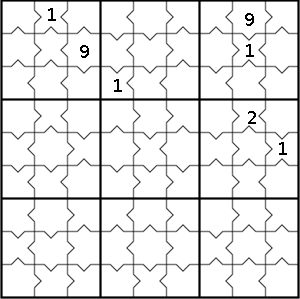
Irregular (Jigsaw) Sudoku — Instead of the standard 3x3 boxes, these puzzles use oddly shaped regions. This breaks your visual habit of scanning boxes in the same familiar way, which forces you to engage your spatial reasoning more deliberately.
Diagonal Sudoku — These add two main diagonals as additional constraint zones. Tracking extra dimensions of logic simultaneously builds what psychologists call working memory capacity — essentially your brain's ability to hold and juggle multiple pieces of information at once.
Killer Sudoku — This variant replaces given numbers with cages and sum clues. It introduces arithmetic reasoning alongside standard sudoku logic, which engages a broader network of problem-solving areas in the brain.
A Simple Experiment You Can Run Yourself
You don't need a lab or a PhD to test this theory. Here's a two-week experiment you can try right now:
Week 1: Solve one standard 9x9 sudoku each day at a difficulty level you're comfortable with. Time yourself on each one and jot down how long it takes.
Week 2: Spend the first four days exclusively solving 6x6 mini grids and one irregular sudoku per day. Don't touch a standard puzzle during this stretch. Then, on days five through seven, return to the same difficulty level of standard 9x9 puzzles and time yourself again.
Many players who've tried this informal experiment report a noticeable drop in their solve times after the variant-heavy stretch — even though (or maybe because) they spent time on puzzles that initially felt more confusing. Your mileage may vary, but the pattern is consistent enough to be worth exploring.
The Paradox in Practice
There's a psychological comfort trap in always solving puzzles at the level where you feel competent. It feels productive. It feels good. But that comfort zone is also a ceiling. You're reinforcing what you already know rather than expanding what you're capable of.
The sudoku paradox — that harder puzzles can make you better at easier ones — is really just a specific example of a broader truth about how human learning works. Growth happens at the edge of your ability, not comfortably inside it.
The good news is that you don't have to abandon the puzzles you love. Think of challenging variants as cross-training. Athletes don't only practice the exact movements of their sport — they build supporting strength and agility through complementary exercises. Your puzzle practice can work the same way.
Start Leaning Into the Struggle
Next time you fire up a sudoku session on Sudoku4, try resisting the urge to default to the grid size and difficulty you know best. Pick something that makes you slow down and think differently. A mini grid. A jigsaw layout. Something that doesn't immediately feel comfortable.
You might get frustrated at first. That's actually the point. Your brain is working harder than usual, building new pattern-recognition tools that will pay dividends the next time you sit down with a standard puzzle.
The harder path, it turns out, often leads somewhere better. And in the world of sudoku, "better" means faster, sharper, and a whole lot more satisfying.