This Is Your Brain on Sudoku: What Neuroscience Actually Says About Puzzles and Mental Fitness

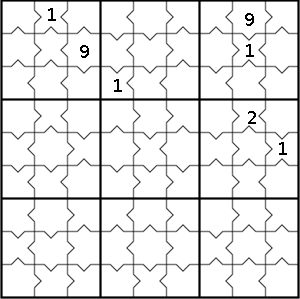
Photo: Marlen077, CC0, via Wikimedia Commons
The Puzzle That's More Than Just a Game
Most of us have picked up a sudoku at some point — maybe in the waiting room at the dentist, on a long flight, or late at night when scrolling through social media just wasn't cutting it. It feels like a guilty pleasure, a harmless distraction. But here's the thing: your brain doesn't see it that way at all.
While you're busy figuring out whether a 7 goes in the top-right corner, your brain is running a surprisingly sophisticated operation. Neuroscientists and cognitive psychologists have been paying close attention to what happens inside our heads during logic puzzle solving, and what they're finding is pretty remarkable. Sudoku, it turns out, might be one of the most accessible brain workouts available — no gym membership required.
What's Actually Happening in Your Head
Every time you sit down with a puzzle, multiple regions of your brain light up simultaneously. The prefrontal cortex — the area responsible for planning, decision-making, and holding information in working memory — gets a genuine workout. You're not just passively recognizing patterns; you're actively constructing and testing hypotheses, eliminating possibilities, and updating your mental model in real time.
Dr. Tracy Alloway, a cognitive psychologist who has studied working memory extensively, has noted that activities requiring people to hold multiple pieces of information in mind while processing new data are among the most effective exercises for the brain. Sudoku fits that description almost perfectly. You're constantly tracking what numbers are missing from a row, what's already placed in a column, and what the constraints of a particular box allow — all at the same time.
This kind of mental juggling strengthens what researchers call "fluid intelligence" — the ability to reason through new problems without relying on prior knowledge. Unlike trivia or vocabulary games, sudoku doesn't reward what you already know. It rewards how well you think in the moment.
Neural Pathways: The "Use It or Lose It" Principle
One of the most compelling arguments for regular puzzle solving comes from the concept of neuroplasticity — the brain's ability to reorganize itself by forming new neural connections throughout life. For a long time, scientists believed this capacity peaked in childhood and gradually faded. We now know that's not entirely true.
The brain retains a meaningful degree of plasticity well into adulthood, and the key to maintaining it is consistent cognitive engagement. Think of neural pathways like trails through a forest. The more you walk a particular path, the clearer and more defined it becomes. Leave it unused, and it starts to overgrow. Challenging mental activities — including logic puzzles — help keep those trails well-worn.
Research published in the New England Journal of Medicine found that adults who frequently engaged in cognitively stimulating activities, such as reading, playing games, and solving puzzles, had a significantly lower risk of developing dementia compared to those who rarely did. The study followed participants for over two decades, making it one of the more robust pieces of evidence connecting mental activity to long-term brain health.
Focus, Stress, and the Unexpected Calm of Concentration
Here's something puzzle enthusiasts often report but that science is now backing up: solving sudoku can actually help reduce stress. That might sound counterintuitive — isn't it frustrating when you get stuck? — but the mechanism makes sense when you think about it.
When you're deeply engaged in a puzzle, your brain enters a state of focused attention that's similar in some ways to mindfulness meditation. You're not ruminating about your to-do list or replaying an awkward conversation from last Tuesday. You're fully present, locked in on a specific, solvable problem. Psychologists sometimes call this "flow" — a mental state of complete absorption that tends to feel rewarding and restorative.
Dr. Robert Reiner, a behavioral neuroscientist based in New York, has described puzzle-solving as a form of "structured mindfulness" — you're training your attention in a goal-directed way rather than just observing your thoughts. For people who struggle with traditional meditation, picking up a sudoku might actually be a more accessible on-ramp to the same cognitive benefits.
The Aging Brain and Why Puzzles Matter More Over Time
As we get older, certain cognitive functions naturally begin to slow. Processing speed, working memory capacity, and the ability to rapidly switch between tasks all tend to decline with age. It's a normal part of getting older — but the rate and severity of that decline aren't entirely fixed.
A growing body of research suggests that people who maintain active cognitive lives age better, cognitively speaking. The concept of "cognitive reserve" refers to the brain's resilience against damage or decline — essentially, how much wear it can handle before symptoms appear. Higher cognitive reserve has been linked to education level, occupational complexity, and yes, leisure activities that challenge the mind.
The Rush Memory and Aging Project, a long-running study out of Chicago, found that participants who engaged in cognitively stimulating activities more frequently showed slower rates of cognitive decline over time. Puzzle solving was among the activities tracked. The takeaway isn't that sudoku will make you immune to aging — it won't. But it may give your brain a meaningful buffer.
Making It a Habit: The Consistency Factor
Brain health researchers are increasingly clear on one point: sporadic bursts of mental activity don't deliver the same benefits as consistent engagement. Just like physical fitness, the gains come from showing up regularly, not from occasional heroic efforts.
The good news is that sudoku is one of the most frictionless habits you can build. You don't need equipment, a partner, or even much time. A single puzzle can take anywhere from five minutes to half an hour depending on difficulty. Starting your morning with an easy puzzle, or winding down in the evening with a medium-level challenge, is a genuinely low-barrier way to invest in your cognitive health.
At Sudoku4, we've built the platform specifically around this idea — that puzzle solving should feel approachable and rewarding at every skill level. Whether you're brand new to the grid or you've been solving for years, there's always a challenge that meets you exactly where you are.
A Simple Habit With Serious Benefits
The science isn't saying sudoku will single-handedly transform your brain or guarantee a sharp mind into your 90s. What it is saying is that the habits we build around cognitive engagement genuinely matter — and that the humble number puzzle sitting on your phone or computer screen is a more powerful tool than most people realize.
So the next time someone gives you a look for spending twenty minutes hunched over a grid, you've got a pretty solid comeback. You're not wasting time. You're doing brain maintenance. And honestly, that's a pretty great reason to keep playing.