Level Up in 30 Days: The No-Nonsense Sudoku Improvement Plan for Beginners Who Are Ready to Get Serious
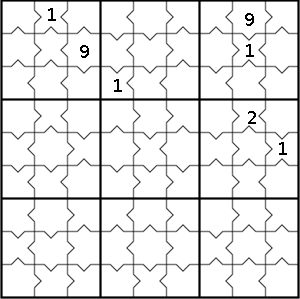
Photo: Saját munka a fenti szabad kép felhsználásával, CC0, via Wikimedia Commons
So You Want to Actually Get Better at Sudoku
Here's a scenario that probably sounds familiar: you breeze through easy puzzles, feel pretty good about yourself, then open a medium difficulty grid and immediately feel like you've never played before. You stare at the board. You guess. You erase. You guess again. Eventually you either luck your way through it or close the app in mild frustration.
The jump from easy to medium — and then medium to hard — isn't just about the puzzles getting trickier. It's about whether you've built the right mental toolkit to handle them. Most casual players plateau not because they lack intelligence, but because they never deliberately learned the techniques that actually move the needle.
This 30-day plan is designed to change that. It's structured, practical, and built around the way real skill development works: gradual exposure, deliberate practice, and consistent repetition. By the end of the month, you won't just be solving harder puzzles — you'll understand why your moves work.
Before You Start: The Beginner Mistakes to Drop Immediately
Before we get into the plan, let's clear out some bad habits that might already be holding you back.
Guessing. This is the big one. If you're filling in numbers because they "feel right" without being able to explain why, you're not solving — you're gambling. Guessing occasionally produces a correct answer, but it also builds zero skill and often creates cascading errors that are a nightmare to untangle.
Ignoring the whole board. Beginners tend to fixate on a single row or box and miss obvious solutions hiding in plain sight elsewhere. Sudoku rewards big-picture thinking. Zoom out regularly.
Skipping pencil marks. A lot of new players resist using candidate notations (small numbers written in each cell showing what's still possible) because it feels like admitting defeat. It's actually the opposite — it's what experienced solvers do on every medium puzzle and above.
Rushing. Sudoku isn't a race, at least not when you're learning. Slowing down and understanding each step is how you build intuition that eventually makes you faster.
Week One: Building Your Foundation (Days 1–7)
The first week is entirely about fundamentals. Your only goal is to understand the three core elimination techniques and practice them until they feel automatic.
Naked Singles: This is the most basic move in sudoku. A naked single occurs when a cell has only one possible candidate remaining after you eliminate all numbers already present in its row, column, and box. Every easy puzzle is essentially a sequence of naked singles. Spend days one and two doing nothing but identifying these on easy grids without any time pressure.
Hidden Singles: This one trips up a lot of beginners. A hidden single is a number that can only go in one cell within a given row, column, or box — even if that cell appears to have multiple candidates. For example, if the number 4 can only fit in one spot in a particular row, it goes there, period. Practice finding hidden singles on days three through five.
Cross-Hatching: Scan rows and columns to see where a specific number can be placed within a box. Go digit by digit (start with 1, find all its valid placements, then move to 2, and so on). This systematic approach ensures you don't miss anything. Spend days six and seven combining cross-hatching with hidden singles on easy-to-medium puzzles.
Daily practice target, Week One: One puzzle per day, no timer, full focus on technique over speed.
Week Two: Stepping Into Intermediate Territory (Days 8–14)
With your foundation solid, it's time to introduce two techniques that unlock medium puzzles.
Naked Pairs: When two cells in the same row, column, or box both contain exactly the same two candidates, those two numbers can be eliminated from all other cells in that unit. This sounds subtle, but spotting naked pairs consistently is a genuine game-changer for medium grids.
Pointing Pairs and Triples: If a candidate number within a box is restricted to a single row or column, that number can be eliminated from the rest of that row or column outside the box. This is one of the most frequently useful intermediate techniques and well worth the time to internalize.
Days eight through eleven: practice identifying naked pairs on medium puzzles, even if you don't need them to solve. The goal is pattern recognition. Days twelve through fourteen: work through full medium puzzles using all techniques learned so far, using pencil marks from the very first move.
Daily practice target, Week Two: One medium puzzle per day, pencil marks required, guessing not allowed.
Week Three: Cracking Hard Puzzles (Days 15–21)
This is where things get genuinely interesting. Hard puzzles require you to chain logic together rather than applying single moves in isolation.
X-Wing: When a candidate number appears in exactly two cells in each of two different rows, and those cells are aligned in the same two columns, that number can be eliminated from those columns everywhere else. It sounds complex but becomes intuitive with practice. Look up a visual diagram — seeing it once makes it click.
Swordfish: The three-row version of X-Wing. Less common but powerful when it appears. Don't stress about mastering this immediately — just understand what it looks like.
The Art of Backtracking (Done Right): On genuinely hard puzzles, there are moments where you've exhausted pure logic and need to make a bifurcation — testing a candidate, following it to its conclusion, and seeing if it leads to a contradiction. This isn't guessing; it's structured hypothesis testing. Always mark your branch point clearly so you can undo if needed.
Daily practice target, Week Three: One hard puzzle every two days, supplemented by medium puzzles on off days. Focus on applying X-Wing when applicable, even if you can solve without it.
Week Four: Building Speed and Confidence (Days 22–30)
By now, you have the techniques. Week four is about consolidation and pushing your limits.
Days twenty-two through twenty-five: time yourself on medium puzzles. Don't race — just note your baseline. Awareness of time builds efficiency without creating panic.
Days twenty-six and twenty-seven: attempt your first expert-level puzzle. Don't expect to finish it. The goal is exposure and identifying which techniques you need to deepen.
Days twenty-eight through thirty: mix difficulty levels freely. Revisit easy puzzles and notice how fast they feel now. That speed is evidence of genuine improvement.
Your 30-Day Challenge Tracker
Print this out or keep it in a notes app. Check off each day as you complete it.
| Day | Difficulty | Technique Focus | Completed |
|---|---|---|---|
| 1–2 | Easy | Naked Singles | ☐ |
| 3–5 | Easy | Hidden Singles | ☐ |
| 6–7 | Easy/Medium | Cross-Hatching | ☐ |
| 8–11 | Medium | Naked Pairs | ☐ |
| 12–14 | Medium | Full Technique Mix | ☐ |
| 15–17 | Hard | X-Wing Intro | ☐ |
| 18–21 | Hard/Medium | Chained Logic | ☐ |
| 22–25 | Medium (Timed) | Speed Building | ☐ |
| 26–27 | Expert | Exposure | ☐ |
| 28–30 | Mixed | Free Play | ☐ |
Sudoku4 has puzzles at every difficulty level you'll need throughout this plan, organized so you can jump straight into the right challenge each day. Bookmark your starting point and come back daily — consistency is the whole game here.
The Real Secret
After thirty days, you won't be a grandmaster. But you'll be something more valuable: a solver who understands how they're solving. That self-awareness compounds quickly. The techniques that feel effortful now will become second nature, and the puzzles that once seemed impossible will start to crack open.
Sharp minds aren't born — they're built, one puzzle at a time.