How Older Siblings and Parents Are Quietly Making Sudoku Cool Again for Gen Z
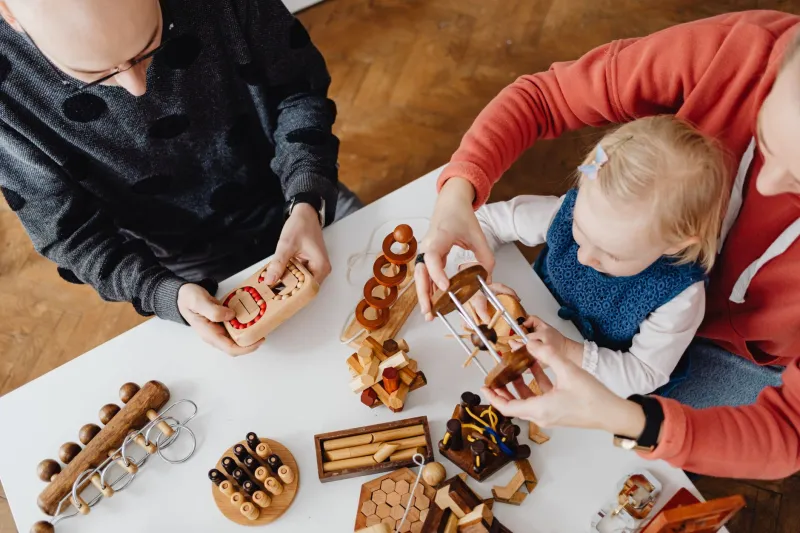
There's a scene playing out in living rooms across America that nobody really predicted: a 28-year-old sitting next to their 16-year-old sibling, both hunched over a sudoku grid, arguing — in the best possible way — about whether a 7 belongs in the top-right corner. No phones. No streaming. Just a puzzle and a little friendly competition.
Sudoku has always had its loyalists. But something new is happening. Millennials who grew up filling in grids during study halls and long car trips are now actively pulling Gen Z into the fold. And Gen Z, despite being the most digitally native generation in history, is actually biting.
The Hand-Me-Down Hobby Nobody Expected
Ask around and you'll find the pattern repeating itself. Rachel, a 31-year-old from Columbus, Ohio, started solving sudoku puzzles on her lunch breaks to decompress from work. When her 17-year-old brother visited for spring break, he picked up her puzzle book out of boredom — and didn't put it down for two hours.
"He kept saying he hated it, but then he'd immediately start the next one," she laughed. "By the end of the week, he'd asked me to download an app for him."
That story isn't unusual. Across households, sudoku is quietly becoming a shared activity — not because it's being marketed to younger audiences, but because someone in the family is literally handing it over and saying try this.
There's something almost old-fashioned about that, in the best way. It's the puzzle equivalent of teaching someone to fish.
Why Millennials Are the Perfect Messengers
Millennials occupy an interesting cultural middle ground. They grew up analog enough to remember life before smartphones, but they're digital enough to understand the pull of screens. That dual fluency makes them surprisingly effective at nudging younger family members toward offline activities without coming across as preachy.
It helps that sudoku doesn't carry the same stigma that, say, asking a teenager to read a physical book might. Puzzles feel neutral. They're not homework. They don't have a message. They're just a problem to solve — and Gen Z, for all the stereotypes, actually loves a good challenge.
Dr. Sandra Kowalski, a cognitive psychologist based in Chicago who studies intergenerational learning, points out that peer modeling is one of the most powerful forces in habit formation. "When a younger person sees someone they respect — an older sibling, a cool aunt, a parent who seems to have their life together — engaging in a behavior, the barrier to trying it themselves drops dramatically," she explains. "Sudoku benefits from that dynamic right now."
The Screen-Free Angle Is Real, But It's Not Preachy
Here's the thing: most families aren't sitting down with sudoku because they've declared a screen-free revolution in the household. It's more organic than that. A phone dies. A flight has no Wi-Fi. Someone forgets their charger at home. And then there's a puzzle book on the coffee table.
Marcus, a 44-year-old dad from Austin, Texas, started keeping sudoku books in the kitchen specifically because dinner table phone use had gotten out of hand. "I didn't make a rule about it. I just started doing a puzzle while I waited for water to boil. My daughter got curious. Now it's kind of our thing before dinner."
His daughter Priya, 15, admits she was skeptical at first. "It looked really boring. But once I actually understood how to do it, it was kind of satisfying? Like, you get this little rush when you figure out where a number goes."
That "little rush" is actually well-documented. Completing a logical deduction — even something as small as confirming which digit belongs in a single cell — triggers a small dopamine response. It's the same basic reward loop that makes mobile games addictive, just without the flashing lights and push notifications designed to keep you scrolling.
Sudoku as a Bonding Language
What's striking about the families who've made sudoku a regular habit is how often they describe it less as a hobby and more as a shared language. There's something about working through the same grid — or competing on who can finish first — that creates a low-pressure space for connection.
Jamie, a 26-year-old from Portland, Oregon, has been solving puzzles with her younger sister since the pandemic. "We started because we were stuck in the house and ran out of things to do. But now, even when we're apart, we'll text each other about a puzzle we're working on. It's become this thing we have."
She pauses. "It sounds kind of nerdy when I say it out loud. But it's genuinely one of the ways we stay close."
That's not nothing. In an era when family members often sit in the same room while existing in entirely separate digital universes, a shared puzzle is a surprisingly effective antidote.
What the Grid Actually Teaches Younger Solvers
Beyond the bonding, there's a legitimate cognitive case for getting younger people into sudoku earlier rather than later. The puzzle trains a specific kind of thinking — systematic elimination, patience with ambiguity, the ability to hold multiple possibilities in mind simultaneously — that translates well beyond the grid.
Research in cognitive development consistently shows that logic-based puzzles strengthen working memory and improve the ability to recognize patterns under pressure. For teenagers who are navigating increasingly complex academic and social environments, that kind of mental flexibility has real value.
And unlike many brain-training apps that isolate specific cognitive tasks in artificial ways, sudoku works the whole problem-solving system at once. You can't brute-force a sudoku. You have to think.
The Comeback Is Already Happening
Search trends, app download data, and anecdotal reports from puzzle communities all point in the same direction: sudoku is experiencing a quiet but real resurgence among younger Americans. And unlike the early-2000s sudoku craze that was largely driven by newspaper puzzles and baby boomers, this wave is being passed down through families.
Millennials aren't trying to make sudoku trendy. They're just sharing something they genuinely enjoy — and it turns out that's enough. Gen Z, for their part, is discovering that not everything worth doing needs an algorithm to recommend it.
Sometimes all it takes is an older sibling saying, "Here, just try it. It's harder than it looks."
And then refusing to give up the pencil until the grid is done.