That Lucky Pencil Isn't Helping You — Here's What the Science Actually Says

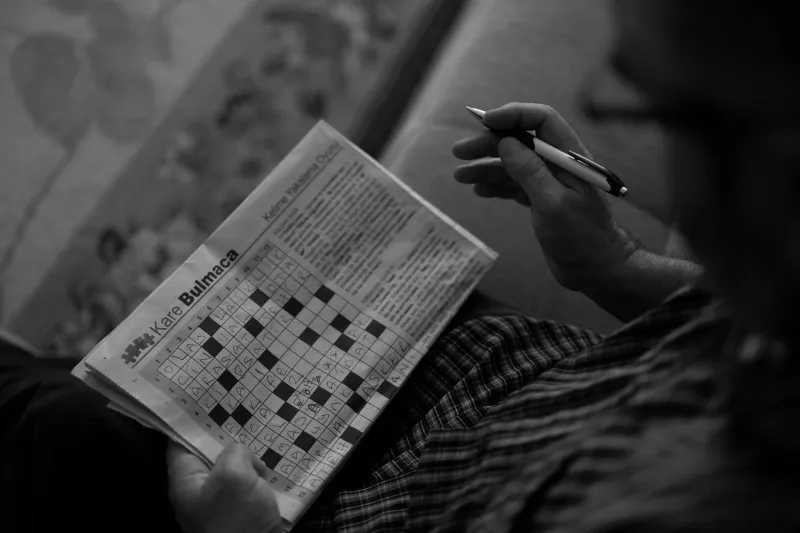
Maybe you've got a specific mechanical pencil you refuse to solve without. Maybe you always start in the top-left box, no exceptions. Maybe the puzzle just doesn't count unless you're sitting in your usual chair with your usual drink at your usual time of day.
If any of that sounds familiar, you're not alone — and you're not weird. Puzzle solvers across the country have developed all kinds of rituals around their sudoku practice. Some are totally harmless. Some might actually be getting in your way. And a few, interestingly, might be doing something genuinely useful — just not for the reasons you think.
Let's dig into what's actually happening when your brain decides it needs a lucky pencil to solve a grid.
Why Our Brains Love a Good Ritual
Human beings are ritual machines. We attach meaning to objects, sequences, and environments constantly — it's practically hardwired. Psychologists call this magical thinking, and while the phrase sounds a little dismissive, the underlying impulse is deeply practical from an evolutionary standpoint. When you can't fully control an outcome, your brain looks for patterns that feel like control. That's not irrational. That's adaptive.
Sudoku, for all its logical structure, involves a lot of uncertainty — especially on harder grids. You're managing incomplete information, running mental simulations, and tolerating ambiguity for extended stretches. That's cognitively expensive. So it makes complete sense that your brain would reach for anything that reduces the feeling of being out of control, even if that thing is a particular brand of pencil.
Research on pre-performance rituals in athletes and musicians suggests that these behaviors can genuinely reduce anxiety and improve focus — not because the ritual has any magical property, but because it signals to the brain that it's time to shift into a specific mode. Think of it like a mental warm-up. The pencil isn't lucky. It's a cue.
The Line Between Helpful Routine and Limiting Belief
Here's where things get interesting — and a little tricky.
There's a meaningful difference between a routine that prepares you and a superstition that constrains you. A preparing routine is flexible. A constraining superstition is brittle.
If your pre-solve ritual helps you settle in, reduce distraction, and arrive at the puzzle mentally ready, that's genuinely useful. Neuroscientists studying habit formation have found that consistent environmental cues can accelerate entry into focused cognitive states. In plain English: doing the same thing before you solve might actually help your brain get into gear faster.
But if you genuinely believe you can't solve well without your lucky pencil — if you feel thrown off when you have to use a different one, or if you abandon a puzzle mid-session because something in your routine got disrupted — that's a different story. Now the ritual isn't serving your thinking. Your thinking is serving the ritual.
This matters because mental flexibility is one of the core skills that sudoku actually builds. The whole point of working through a hard grid is training your brain to adapt, reconsider, and find new angles when an approach stops working. If your pre-solve rituals are making you less adaptable before you even put pencil to paper, you're undermining the very thing that makes puzzle-solving valuable.
What Neuroscience Says About Control and Cognition
Studies on perceived control and cognitive performance consistently show that when people feel more in control of their environment, they tend to perform better on complex tasks. This is sometimes called the locus of control effect, and it's one reason pre-performance rituals have real psychological value.
But here's the catch: that benefit depends on the control feeling being internalized. In other words, the confidence needs to come from you — your skills, your preparation, your experience with the puzzle — not from an external object. When you outsource your confidence to a lucky pencil, you're actually doing the opposite of what builds genuine cognitive resilience. You're creating a dependency.
Psychologists studying superstition in performance contexts have found that people who rely heavily on external luck objects tend to show more anxiety when those objects are unavailable, and lower baseline confidence in their own abilities over time. The lucky pencil starts as a crutch and can quietly become a cage.
Separating the Good Habits from the Traps
So how do you know if your sudoku rituals are working for you or against you? A few honest questions worth asking:
Can you solve comfortably without it? Try deliberately leaving your lucky item behind for a session or two. If your performance stays roughly the same, the ritual was always just a warm-up cue — which is fine. If you spiral, that's worth paying attention to.
Does the ritual reduce anxiety or create it? Good routines calm you down before a solve. Superstitions often introduce new anxiety — the worry that something will go wrong if the ritual isn't performed correctly. That's the opposite of helpful.
Is your starting point flexible? Lots of experienced solvers have a preferred entry point on the grid, and that's totally reasonable — it's often based on sound strategy. But if you feel genuinely unable to approach a puzzle any other way, you might be limiting your own problem-solving range without realizing it.
Are you building skill or building dependency? Every session should be leaving you a little more confident in your own reasoning. If you feel like you're only as good as your setup, something's off.
Building Real Confidence at the Grid
The good news is that actual puzzle-solving confidence — the kind that doesn't depend on any external object — is absolutely buildable. It comes from doing the reps, learning techniques, and developing a genuine feel for how grids work.
If you want a ritual, make it something that builds skill rather than something that substitutes for it. A two-minute scan of the grid before writing anything. A deliberate check of all rows, columns, and boxes before committing to a number. A quick mental reset when you hit a wall. These are routines with real cognitive value baked in.
And honestly? The most powerful pre-solve ritual you can develop is just trusting that you've solved enough puzzles to handle whatever the grid throws at you. No lucky pencil required.
Your brain is the tool. Everything else is just furniture.