Racing the Clock vs. Taking Your Time: What Your Sudoku Solving Style Says About How You Learn
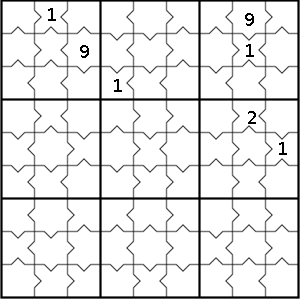
Photo: Saját munka a fenti szabad kép felhsználásával, CC0, via Wikimedia Commons
Two Types of Solvers Walk Into a Puzzle
Log onto any sudoku leaderboard or scroll through a puzzle community on Reddit, and you'll find two very distinct tribes. There's the speed crowd — people who chase personal bests, celebrate sub-three-minute solves, and treat every session like a race. Then there's the deliberate crew — solvers who annotate candidates, work through logic chains methodically, and couldn't care less how long a puzzle takes.
Both groups swear their approach makes them better at sudoku. Both are right. But they're getting better at different things, and understanding that distinction might be the most useful thing you can do for your long-term puzzle game.
What Speed Solving Actually Does to Your Brain
Let's start with the fast lane. Speed solving isn't just about moving quickly — it's about pattern recognition at a near-automatic level. When experienced solvers blitz through a grid, they're not consciously analyzing each cell. They're recognizing configurations they've seen hundreds of times before and responding to them almost reflexively. Researchers who study skill acquisition call this process "chunking" — your brain groups familiar patterns into single mental units so you can process them faster.
The cognitive benefit here is real. Regular speed solving builds what's sometimes called perceptual fluency — the ability to quickly extract meaningful structure from visual information. Over time, a fast solver starts to see a puzzle differently than a beginner does. Where a novice sees 81 individual cells, an experienced speed solver sees clusters, relationships, and constraints all at once.
This kind of automatic pattern recognition has genuine spillover effects. Studies on expertise and visual cognition suggest that people who regularly practice rapid pattern identification in structured environments — whether that's chess, music reading, or yes, sudoku — tend to show improvements in tasks that require fast visual scanning and categorization. For everyday Americans juggling a lot of information, that's not a trivial benefit.
The downside? Speed solving can become a crutch. If you're always operating on autopilot, you stop building new logical frameworks. You get faster at what you already know, but you stop expanding what you know.
The Case for Going Slow
Methodical solving is a completely different cognitive workout, and in some ways a more demanding one. When you slow down, annotate candidates, and work through elimination chains step by step, you're engaging your working memory and explicit reasoning systems much more heavily. You're essentially forcing your brain to hold multiple hypotheses in mind simultaneously and test them against constraints — which is a pretty solid description of what scientists call "relational reasoning."
This type of thinking is strongly associated with fluid intelligence — the ability to solve novel problems you've never encountered before. Unlike pattern recognition, which depends on familiarity, relational reasoning works on unfamiliar terrain. That's why methodical solvers often handle genuinely hard or unusual puzzle configurations better than speed solvers who've never seen that particular pattern before.
There's also a learning retention argument here. When you slow down and consciously work through why a number goes in a particular cell rather than just knowing it does, you're encoding that logic more deeply. It's the difference between recognition memory and recall memory — and recall is the more durable, transferable form of knowledge.
So Which One Actually Makes You Smarter?
Here's the honest answer: neither approach is universally superior, and framing it as a competition misses the point. They build different cognitive muscles, and the smartest thing you can do is use both — intentionally.
Think of it the way athletes think about training. A sprinter doesn't only sprint. They also do long, slow distance runs to build aerobic base. A marathon runner doesn't only run long — they do speed intervals to improve turnover. The variety is the point. Each mode of training develops something the other can't, and together they create a more complete athlete.
The same logic applies to puzzle solving. Speed sessions build fluency and sharpen your automatic recognition. Slow, deliberate sessions build depth and logical rigor. Rotating between them — even within the same week — gives your brain exposure to both types of challenge.
How to Identify Your Natural Style (And Why You Should Push Against It)
Most people have a natural default. You probably already know which camp you fall into. If you're a natural speed solver, you likely feel restless during slow solves and tend to guess when you get stuck rather than working through it. If you're a methodical solver, you might feel anxious during timed sessions and default to annotation even on simple puzzles where it isn't necessary.
Your natural style isn't wrong — but leaning into it exclusively means you're always training the same mental muscle while the other one atrophies.
A practical way to push against your default: pick one session per week where you deliberately work in your non-dominant style. Speed solvers, choose an easy puzzle and force yourself to annotate every candidate before placing a single number. Don't skip ahead even when the answer seems obvious. Methodical solvers, set a timer for a medium puzzle and commit to finishing before it goes off — even if that means making a few intuitive guesses you'd normally avoid.
The discomfort you feel during those sessions? That's growth. That's your brain building something new.
A Note on Difficulty Level
It's worth mentioning that difficulty level and solving style interact in important ways. Speed solving works best on easy to medium puzzles where pattern recognition is sufficient. On hard or expert-level grids, speed solving tends to break down — those puzzles are specifically designed to require logical chains that can't be shortcut by pattern recognition alone.
If you're a speed solver who's hit a ceiling and can't crack hard puzzles, the fix almost certainly isn't to get faster. It's to slow down and build the deliberate reasoning skills that hard puzzles demand.
Conversely, if you're a methodical solver who wants to get more fluid and enjoyable sessions in, practicing speed on easier grids is a low-stakes way to develop automatic recognition without the pressure of failing a hard puzzle.
The Bottom Line
Your sudoku solving style is a window into how you naturally process information. Speed and deliberation aren't opposites — they're complementary tools. The goal isn't to pick one and master it. It's to develop enough range that you can shift gears based on what the puzzle — and your brain — actually needs in that moment.
That kind of flexibility? That's where the real mental gains live.