From Solo Grids to Group Wins: Why Americans Are Solving Sudoku Together
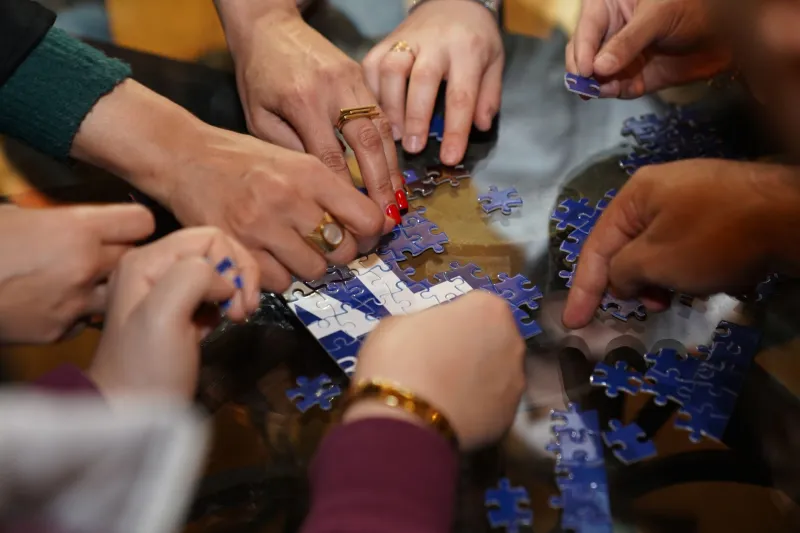
For most of its mainstream life, sudoku has been a deeply personal activity. You hunker down on a lunch break, crack open a puzzle book on a flight, or quietly work through a grid while the coffee goes lukewarm. It's a solo pursuit by nature — or at least, that's what most people assumed.
But something interesting has been happening across the country, in library meeting rooms, Discord servers, Reddit threads, and coffee shop corners. People are solving puzzles together. And they're not just having fun — they're getting better, staying more consistent, and genuinely looking forward to it in a way that solo grids never quite managed.
Welcome to the social sudoku revolution.
The Rise of the Puzzle Club
Think of it like a book club, but instead of debating whether a novel's ending was satisfying, you're debating whether a naked single was the cleanest move in row four. Puzzle communities have been quietly growing for years, but the post-pandemic appetite for low-stakes, intellectually stimulating social activities gave them a serious boost.
According to data from Meetup.com, logic puzzle groups — including sudoku-focused ones — saw a notable uptick in new member registrations starting in 2021 and haven't slowed down. In cities like Chicago, Austin, and Portland, weekly puzzle nights have become a genuine fixture for people looking for something more engaging than trivia night but less intense than a competitive gaming league.
Organizers of these groups describe a surprisingly consistent pattern: people show up the first time because they're curious, and they keep coming back because of the people.
"It started with just four of us at a coffee shop," says one organizer of a weekly puzzle group in Denver. "Now we've got over thirty regulars. Half of them had never done sudoku seriously before joining. The community pulled them in deeper than any app ever could."
Why Solving Together Works
There's actual science behind why group problem-solving tends to stick better than going it alone. Researchers studying collaborative cognition have found that working through logic challenges in a social setting activates more diverse cognitive pathways than solo solving. When you explain your reasoning to someone else — or hear theirs — you're forced to articulate things your brain was doing quietly, which reinforces those strategies in a way that silent solo practice doesn't.
There's also the accountability factor. It's easy to skip a puzzle app for a week when no one's watching. It's a lot harder to ghost a group of people who are genuinely expecting to see you Thursday night. Social accountability, as behavioral psychologists have long noted, is one of the most reliable drivers of consistent habit formation — and puzzle communities leverage that naturally, without anyone having to enforce it.
Psychologist Wendy Wood, whose research on habit formation has been widely cited in behavioral science circles, has noted that social contexts create what she calls "friction reduction" — meaning that the social reward of showing up lowers the psychological barrier to doing the activity itself. In plain terms: you go because you want to see your puzzle friends, and the sudoku is almost a bonus.
Online Communities Are Just as Powerful
You don't have to find a local group to tap into this. Online puzzle communities have exploded in size and sophistication, and many of them are doing something genuinely impressive: creating the social texture of an in-person group through digital tools.
Subreddits dedicated to sudoku and logic puzzles regularly see members posting their grids mid-solve, asking for hints without spoilers, and celebrating each other's breakthroughs. Discord servers host timed group solves where everyone starts the same puzzle at the same moment and then compares notes afterward. It sounds nerdy — because it is — but it's also genuinely engaging in a way that casual solo play rarely matches.
Competitive platforms have also leaned into the social dimension. Features like leaderboards, weekly challenges, and head-to-head timed solves give players a reason to return that has nothing to do with the puzzle itself and everything to do with the community around it.
"I've made actual friends through puzzle forums," says one regular participant in an online sudoku league. "People I talk to every week. We started with sudoku and now we talk about everything. The puzzle is kind of the excuse."
The Psychology of Shared Struggle
There's something worth noting about why logic puzzles, specifically, lend themselves so well to community building. Unlike games that require direct competition to be interesting, sudoku is fundamentally cooperative in a social context. You're not beating each other — you're beating the puzzle together, or comparing how you each approached the same challenge.
This creates what social psychologists call "parallel bonding" — the kind of connection that forms when people share an experience side by side rather than face to face. It's the same dynamic that makes road trips bonding experiences, or why people who go through a tough workout together feel closer afterward. You struggled with the same thing. You get it.
For a lot of Americans who find purely social settings exhausting or awkward, having a puzzle as the centerpiece of a gathering is a genuine relief. The grid gives everyone something to focus on. There's always something to talk about. The silence is never uncomfortable because everyone's thinking.
How to Find (or Start) Your Own Puzzle Community
If this sounds appealing, the barrier to entry is lower than you might think.
Look locally first. Libraries and community centers are increasingly hosting logic puzzle nights, especially in medium-sized cities. Search Meetup.com for puzzle or sudoku groups in your area — you might be surprised what's already out there.
Go online if local options are thin. The r/sudoku subreddit is active and welcoming to all skill levels. Discord has several dedicated puzzle servers that host regular events. A quick search will get you there.
Start something yourself. If nothing exists in your area, consider that the organizers of today's 30-person puzzle nights all started with a group chat and a coffee shop table. You don't need to be an expert. You just need to show up consistently.
Mix skill levels intentionally. The best puzzle communities aren't sorted by ability — they're mixed. Beginners learn faster when they can watch experienced solvers think out loud, and experienced solvers often rediscover their love of the basics when they explain them to someone new.
The Bigger Picture
What's happening with sudoku communities is part of a broader cultural shift. Americans are actively seeking out activities that are mentally stimulating, socially connected, and free from the pressure of performance culture. Puzzle groups check all three boxes. There's no boss, no grade, no stakes — just a grid, some good company, and the quiet satisfaction of making something click into place.
Whether you're a seasoned solver who's been going it alone for years or someone who barely remembers the rules, there's probably a community out there that would make you want to come back to the grid more often. And honestly? That's the best possible reason to give it a shot.